Box to Battlefield: Konflikt 47 Axis force
Give us a little introduction to yourself and your hobby history with this hobby:
Hey readers, my name is Bryan and I’ve been painting miniatures for about 30 years. As we all know there are many ways to enjoy this hobby, my favourite aspect is creating armies that evoke a strong narrative just by looking at them. The unique Konflikt 47 setting offers a particularly good opportunity for this. It’s such a great sandbox for your imagination, allowing you to blend sci-fi and historical elements and create a unique force of your own.
So what exactly are we looking at here?:
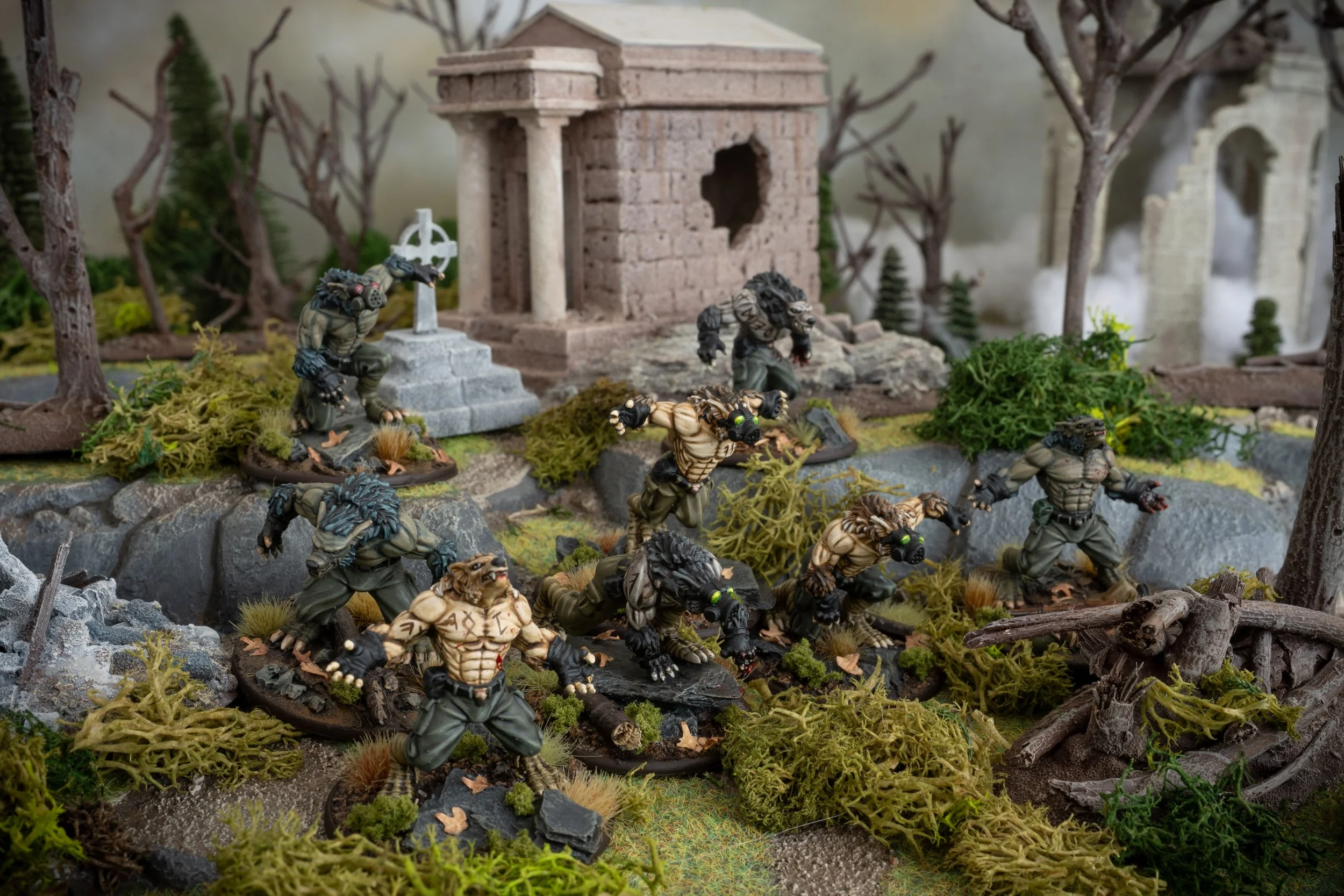
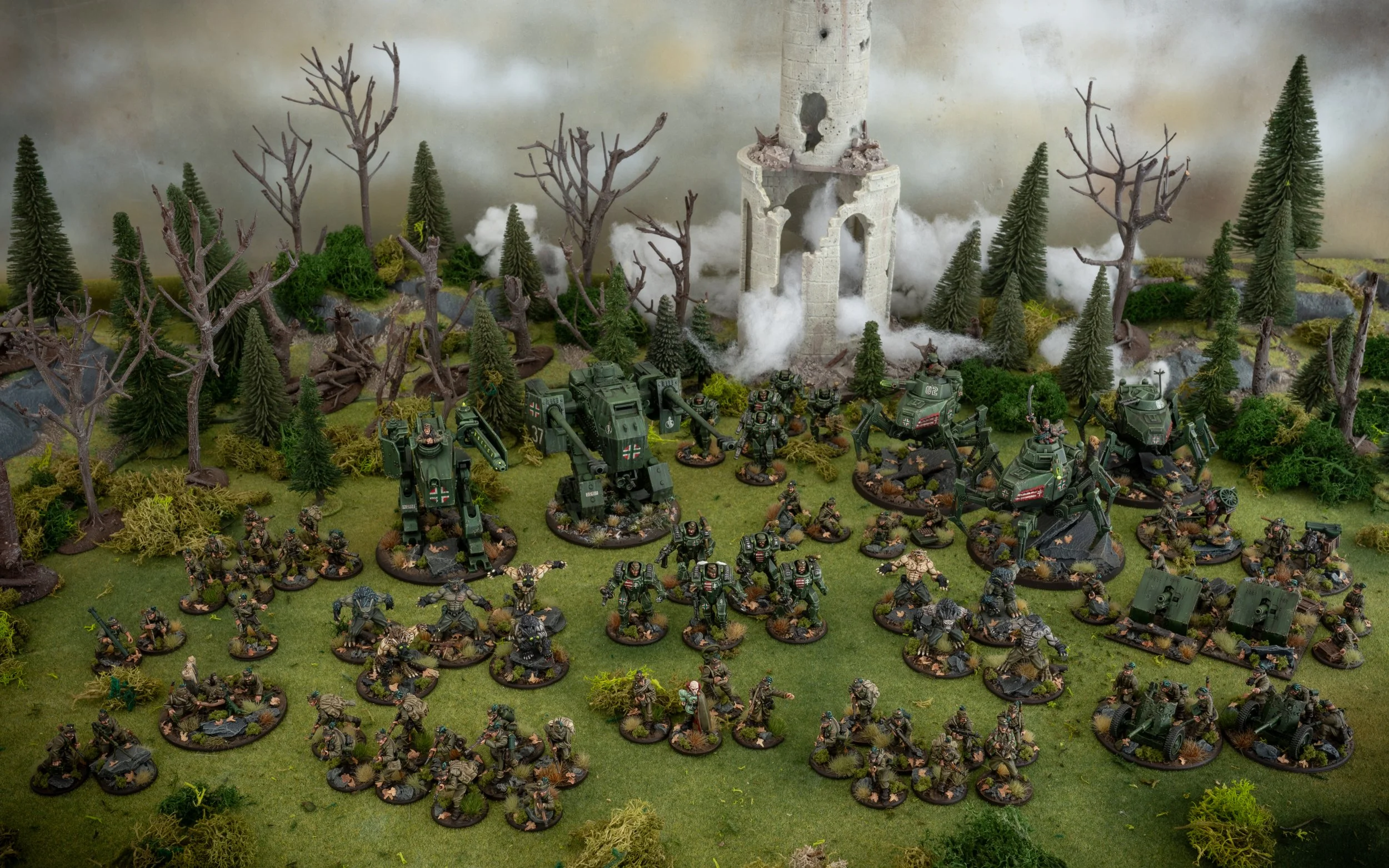
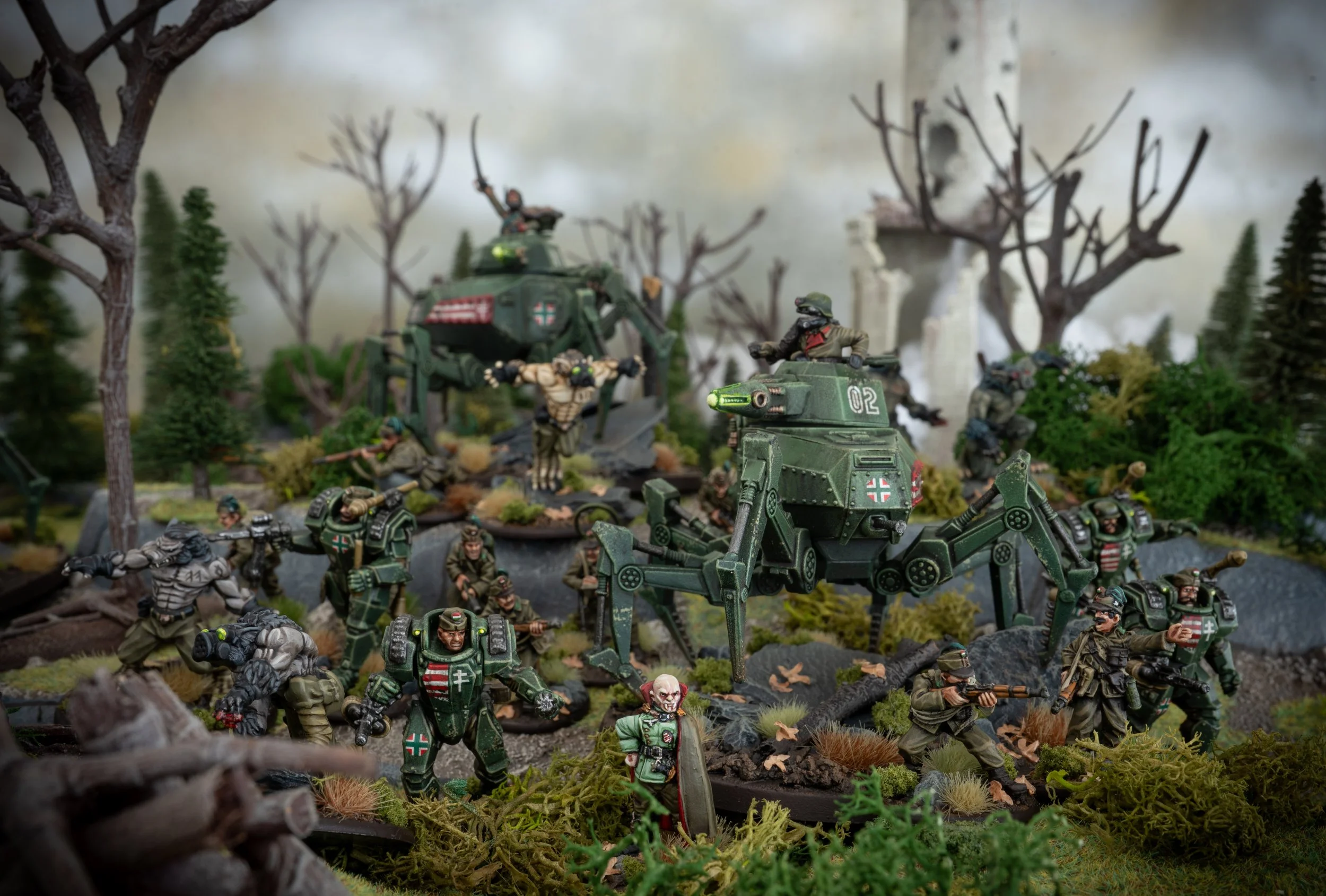
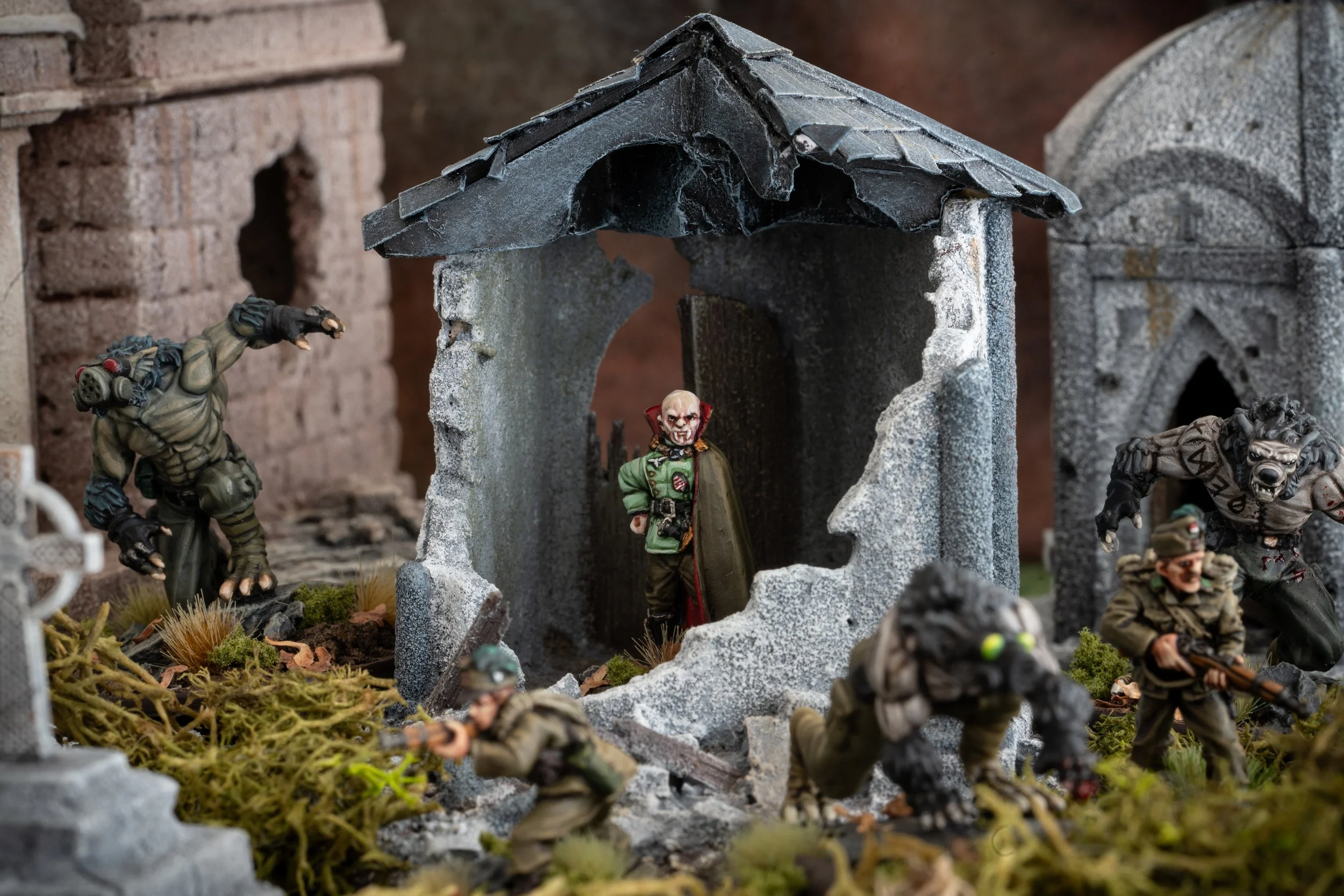
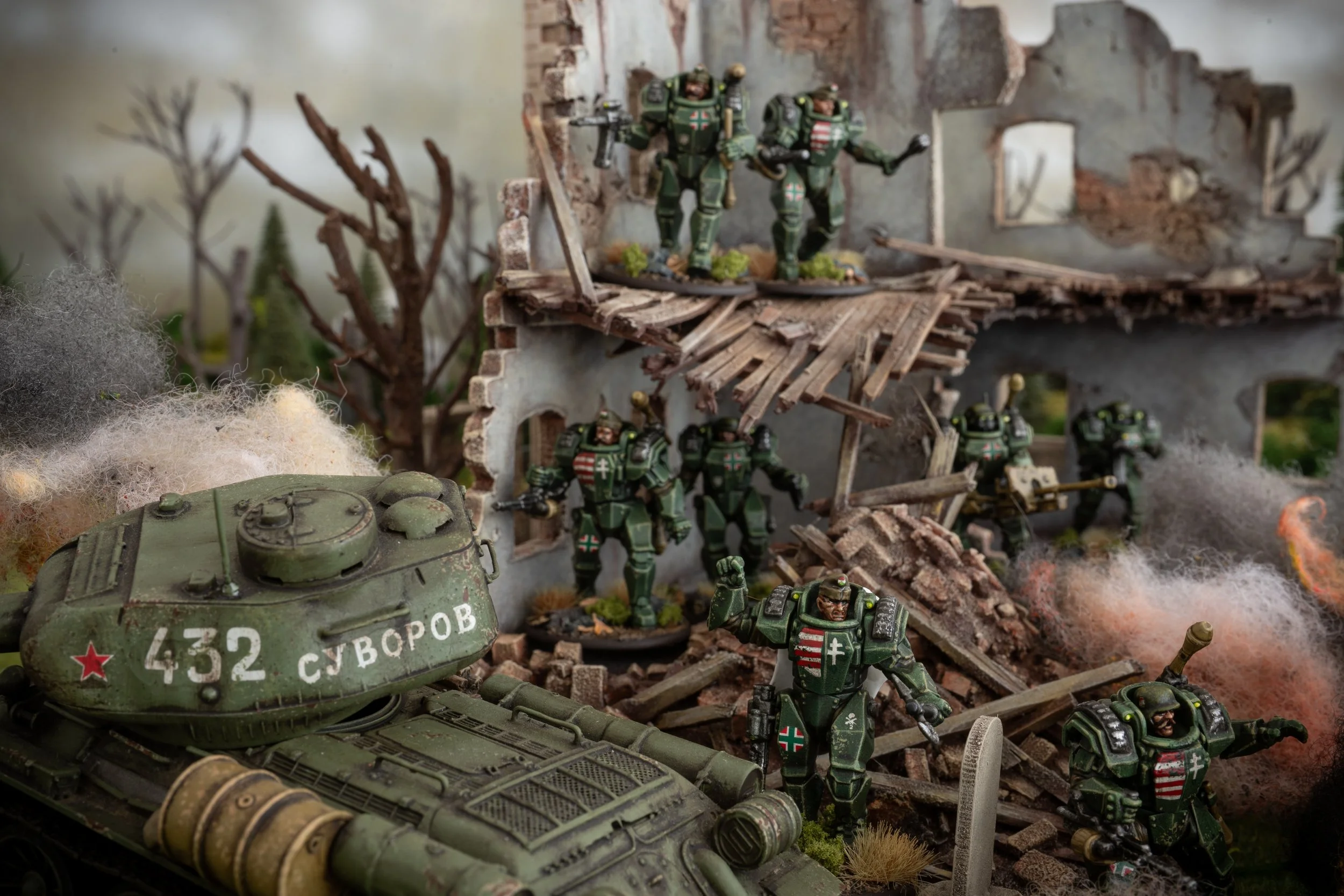
This is Kampgruppe Carpathia, my Axis army for Konflikt 47, in which I have chosen to focus on what a force of Hungarian troops might look like in this setting. The back story behind my army is this is a specialised force that operates in the Carpathian mountains, led by a nobleman from the region, Count Báthory. This impossibly ancient and creepy officer brings with him packs of horrors from the forests, Shreckwulfen as well as men from the villages to fill the ranks of the Border Guards.
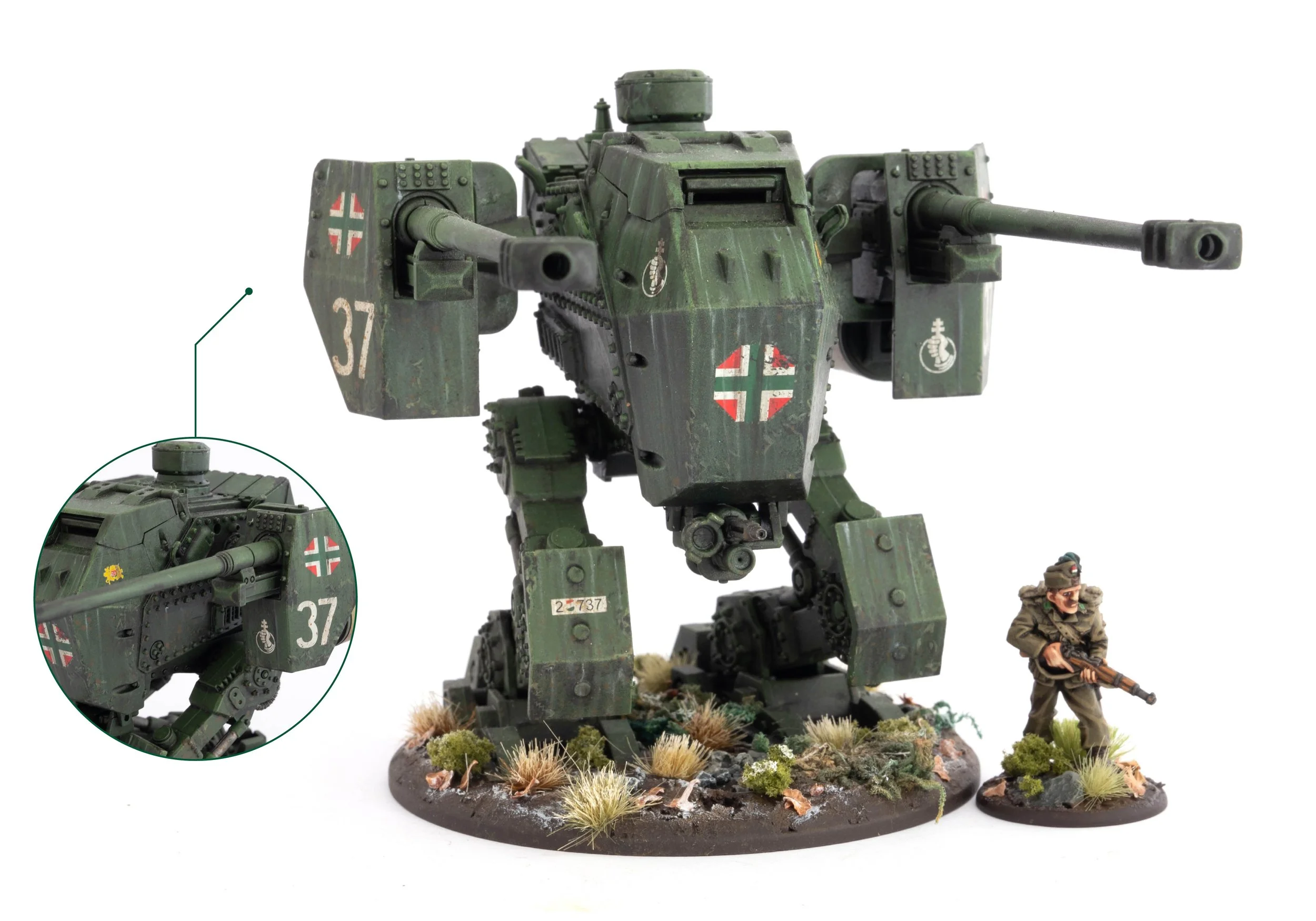
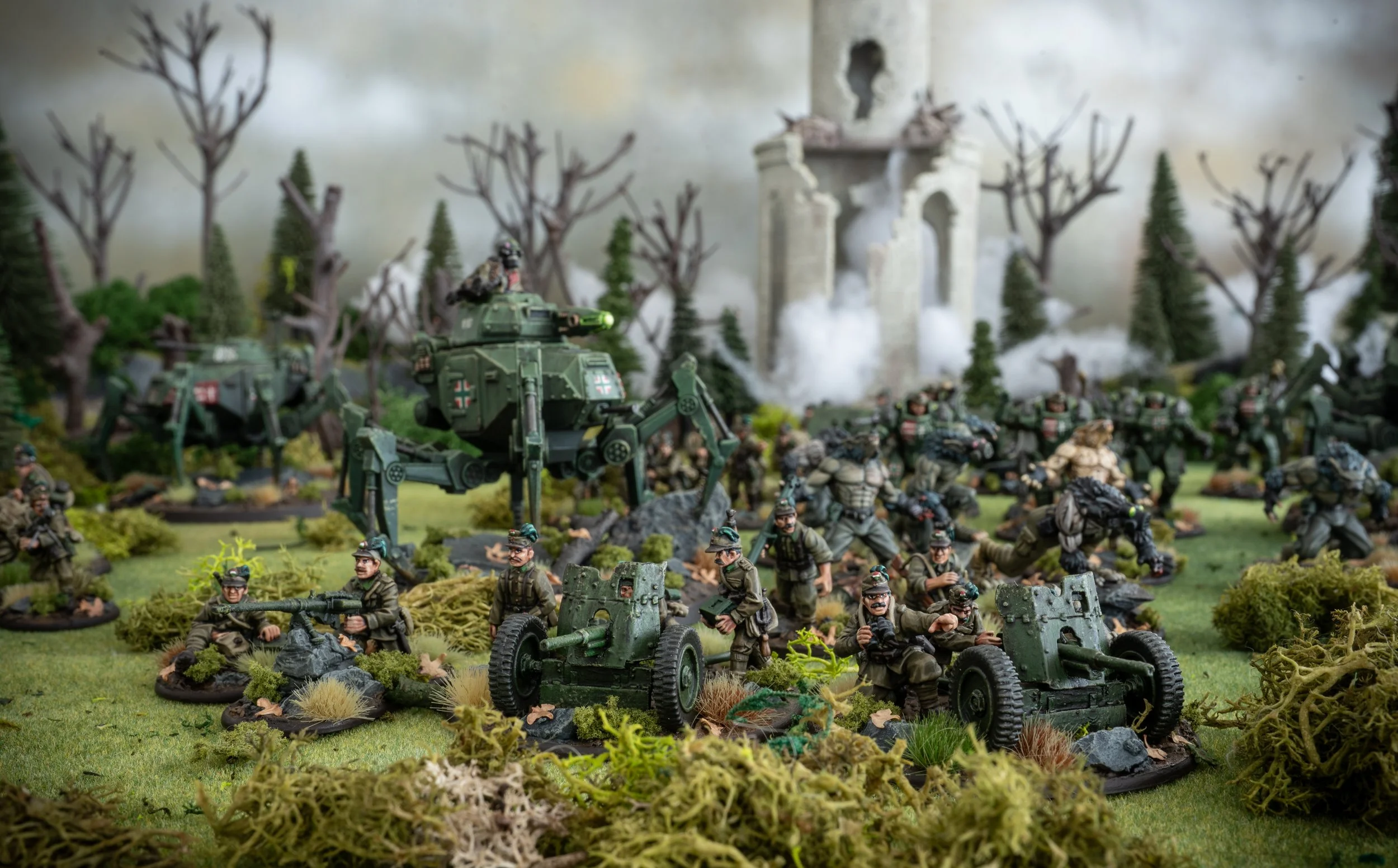
To support these local forces the best of Axis industry has been sent in the form of a squadron of Hussars operating various walkers and a platoon of Stahltruppen heavy infantry.
What drew you to this particular project?:
I’ve had a fascination with Hungary and it’s history for a while and have collected a large army for Bolt Action, so extending this into Konflikt 47 was a natural progression. What is particularly fun is I can draw on different eras of Hungarian martial history other than WW2 and mix it in as the setting is very accommodating of this. Once I saw the direction of the Axis forces in the 2025 version of the game I was immediately inspired to give my own twist to my army. The heraldry on the Stahltruppen and VogelSpine walkers is inspired by medieval Hungarian knights, Napoleonic Hussars as well as WW2 insignia. I love that you can do that with this setting.
Which miniatures range(s) did you use to create this force/collection and why?:
I have used a variety of Warlord Games miniatures to make the force. The Vampire-esque Count himself is straight out of the blister pack, no conversion required.
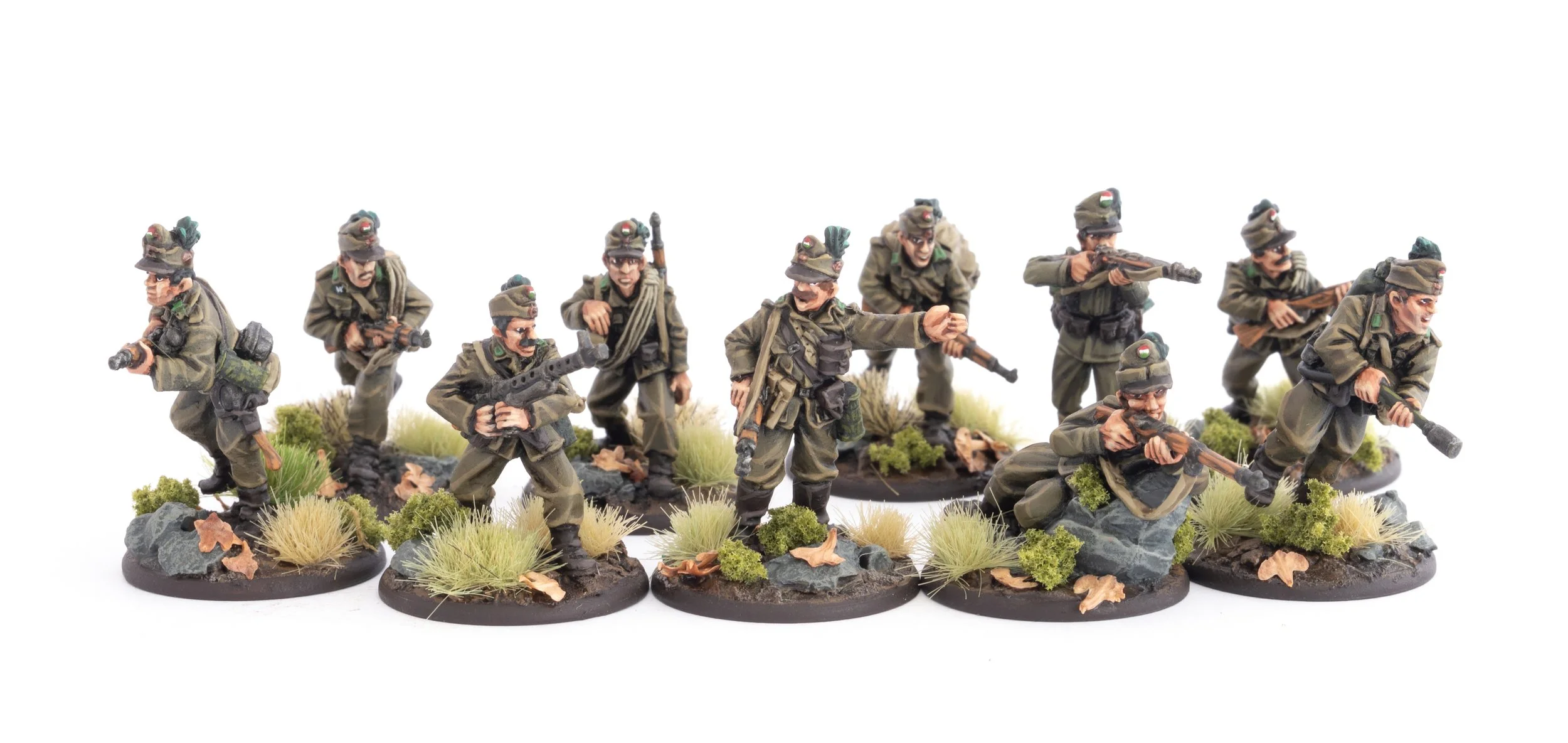
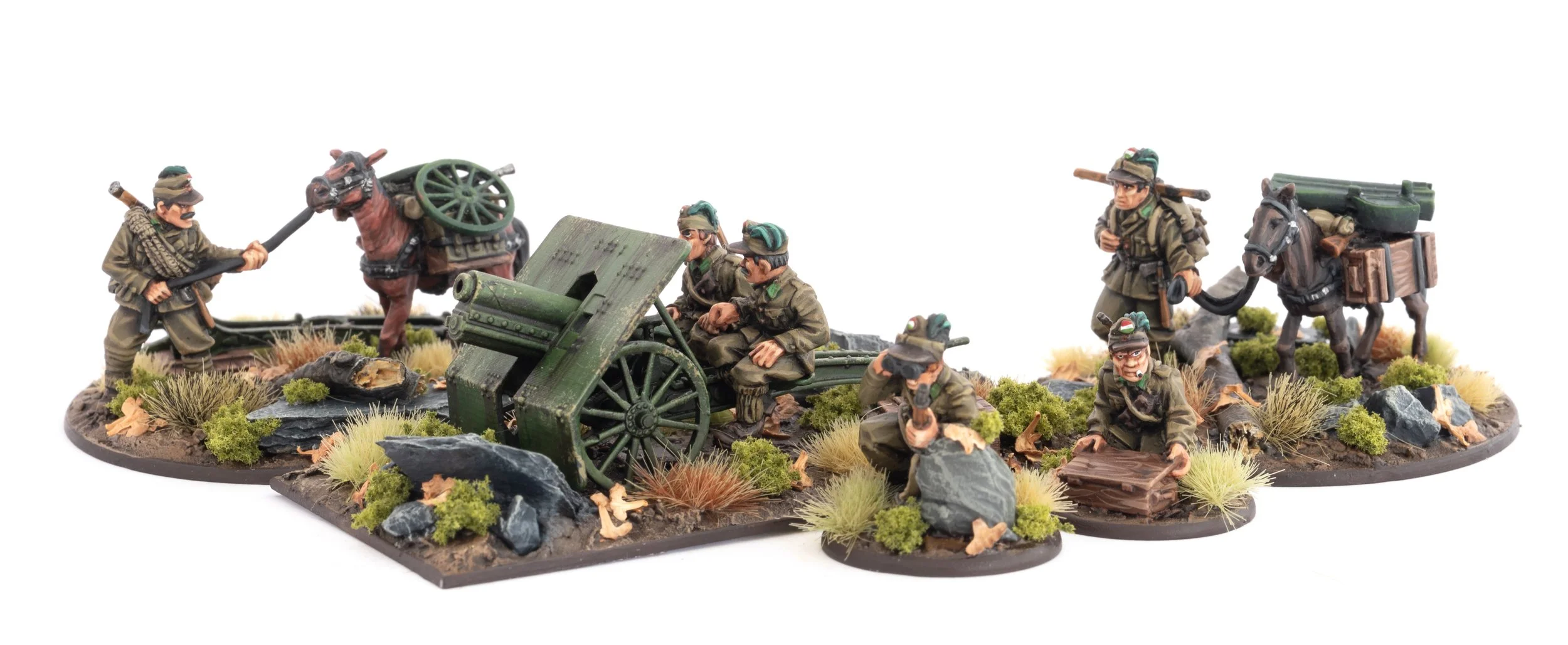
The basic infantry squads are all Border Guards and Mountain Division from the Bolt Action Hungarian range. To convert up the AT guns and weapon teams I converted Italian Alpini miniatures, mostly with just head swaps, taking plastic German heads with peaked caps and adding a mustache and feathered plume.
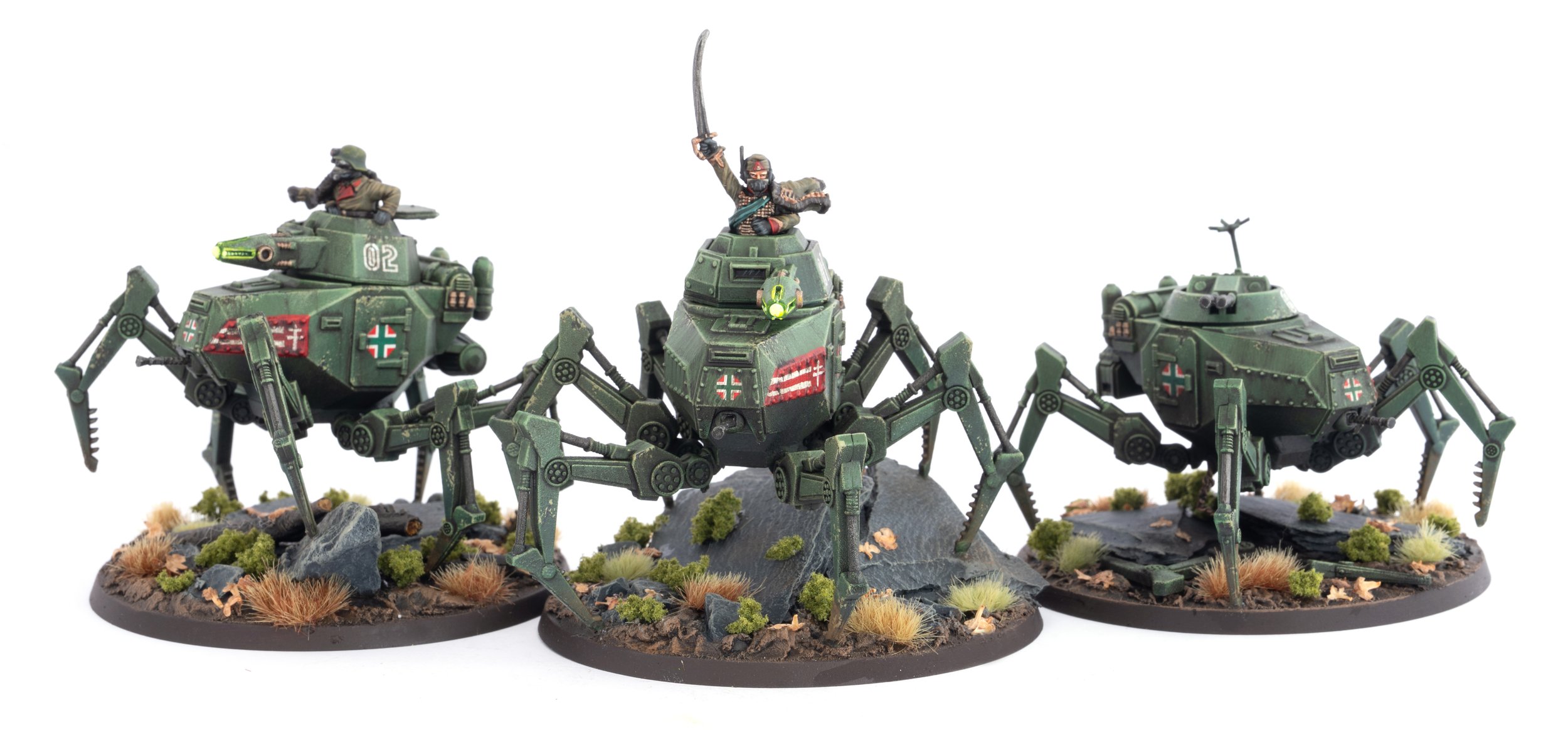
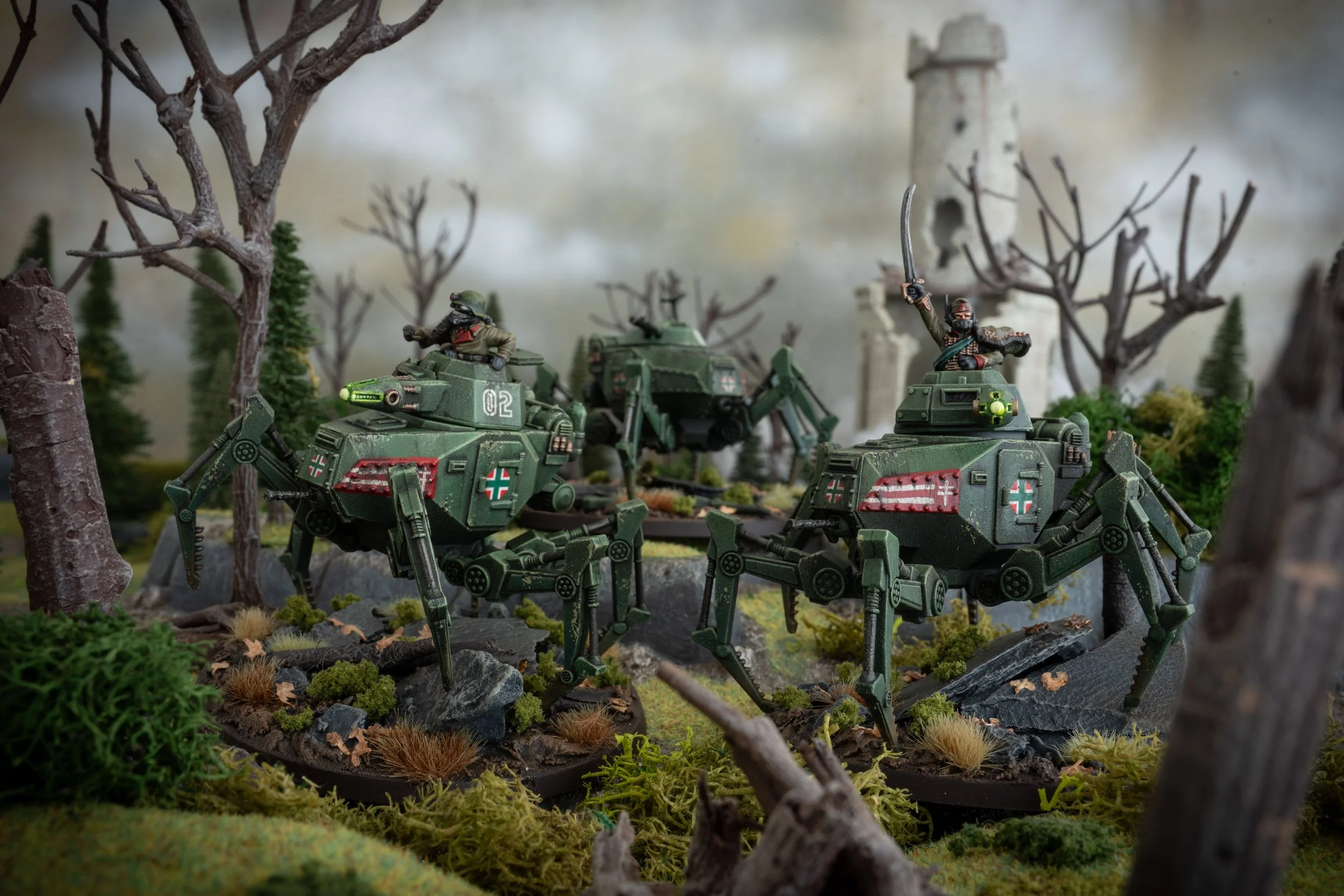
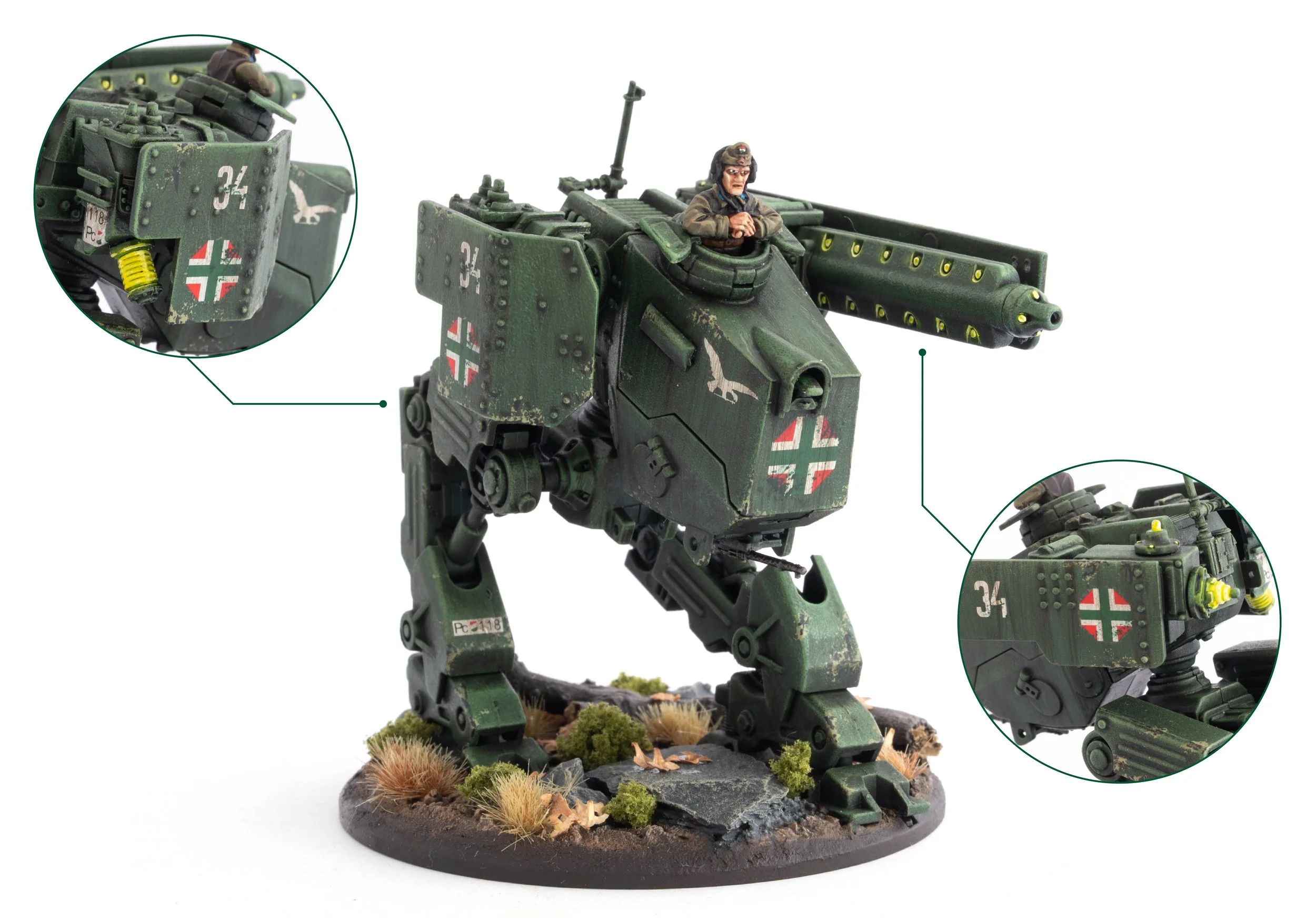
For the walker platoon I used three of the plastic Voglespinne and two old walkers from the Dust Tactics game. To help tell the narrative of the army I imagined the walkers being a modern incarnation of the famous Hungarian cavalry, the Hussars. To achieve this in miniature was rather simple in the end, for the crew I used the plastic French Hussar sprue from the Napoleonic range to embellish the crew that comes in the Vogelspinne box. The platoon commander has a full Hussar body and pelisse (the very fetching short fur trimmed jacket over the shoulder) combined with one of the three heads that comes in the Vogelspinne box. The second Hussar crewman is the Vogelspinne crew body and helmated head, again with a stylish pelisse thrown over the shoulder. You could really do many combinations of these two sprues to make some fun looking crewmen very easily. I like the idea that these spider-like walkers are adept at crawling over the mountainous region my force is operating in, as well as their sinister appearance suiting the classic horror vibe the army has.
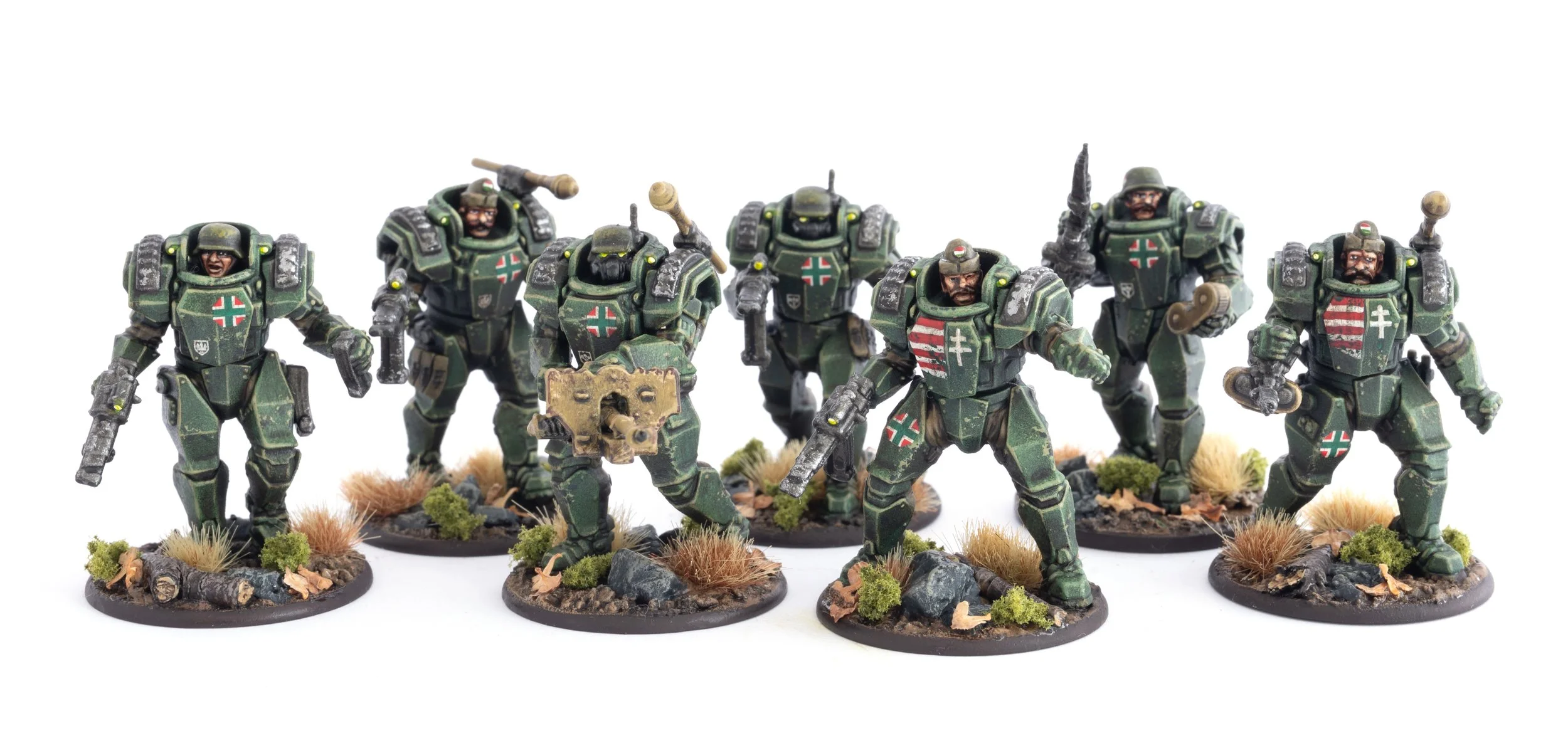
The Stahltruppen were much more involved as they required some sculpting on the heads, to give them the look I wanted. Here I used plastic Italian heads with soft caps and modified them with green stuff to match the style of Hungarian ones from WW2, plus adding a few mustaches of course! Most of the Hungarian feel came with how I painted the armour, adding a lot of old Hungarian heraldry and adding a few medieval maces and axes helps sell the idea that these troops see themselves as maybe 1947 versions of Hungarian knights.
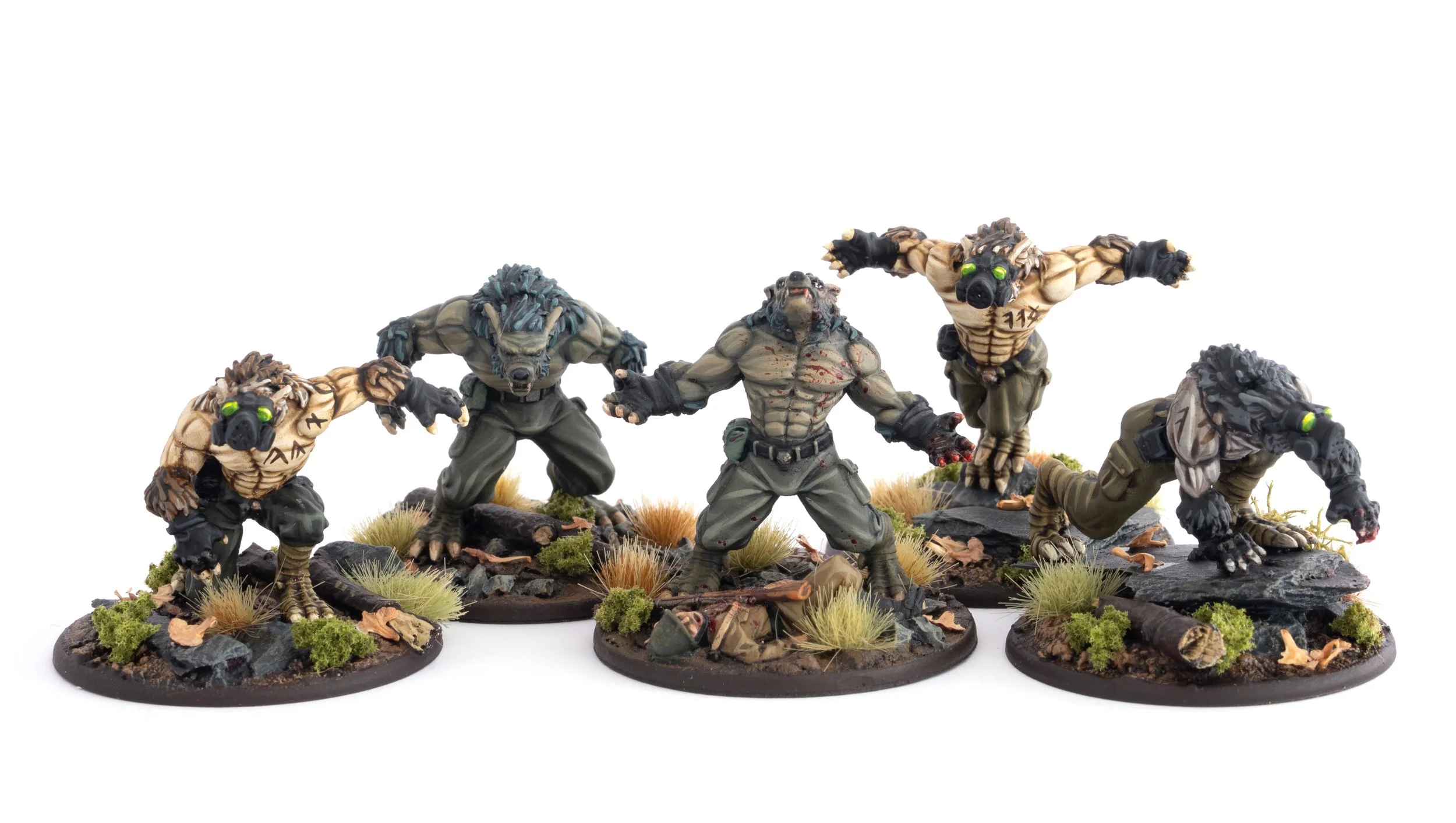
The wild Shreckwulfen were ironically the easiest models to work with, they are one of the main inspirations for the army’s back story, and so are perfect just straight out of the box. These were my favourite models to paint, being big chunky monsters in very dynamic poses.
Did you paint all the minis for gaming? And if so, are there particular rules sets you will be using to play with them?:
I always paint armies with the goal of playing with them, it’s the natural conclusion to the loop of build/paint/play where you get to see the narrative for your army that’s in your head literally play out on the table. I can play both Konflikt 47and Bolt Action with this force. If you take away the Rift units, this army is actually a 1944 Hungarian Border Guards platoon.
Do you have some favourite units or models in this force?:
It’s actually hard to choose my favourite models in this force as I enjoyed painting them all, there being such a variety it really kept me inspired. If I had to choose a favourite it might be the Hussar commander and his Vogelspinne walker.
How was the experience of working on this project? How long did it take you from opening the boxes to being ready for the battlefield?:
I painted the ‘Bolt Action’ core of the force over about 3 months when 3rd edition was released in 2024. Because it’s a historical force that was purely infantry, it was easy to add the whole layer of Konflikt 47 units straight on top a year later when the new Axis range came out. Again, painting all the new Rift units took about 4 months of my hobby time, which is about 8 hours a week after work and looking after the family.
What challenges came up while working to complete this project?:
Converting the Stahltruppen was definitely challenging as I am not a very experienced sculptor. By using existing heads that are the closest I can get to what I wanted it made it achievable.
Could you share your tips for staying focused and motivated on these large painting projects?:
Variety is the key for keeping me motivated during the painting of a big army project. I try to alternate between unit types as I paint along so I don’t get burnt out, or loose interest. For example, painting a squad of monsters or an armoured walker in between each basic infantry squad is a fun ‘reward’. I can recommend using one of the many ‘to-do’ list apps out there to write up the full list of units you need to paint to make your army, and schedule them out in this alternating order. Then you can tick them off as you work through them. It helps keep you focused and not wasting time trying to work out what to paint that week/month.
Did you employ any particular painting techniques to help speed up the process of painting all the models?:
One particular painting technique I employed to speed things up a bit was to paint the Stahltruppen heavy infantry the same way I do vehicles. The vehicles and heavy infantry are sprayed a dark green as a primer, then a mid green from above, getting both the main colour applied and also some basic shading in minutes. I then drybrushed a light green over all the raised edges and rivets and used a sponge to do chipping damage with a very light green. After applying decals and painting any insignia, a gloss varnish coat is applied to protect all of this. The final stage that ties everything together is an oil wash of 1 part 50/50 burnt umber and black artist paint to 9 parts white spirit. Paint all the green armour with this wash, then wipe the model down with a rag 20mins later. You end up with armour which is shaded and weathered in one go.
You can find a step by step guide here on the PATM website
Was there any particular modelling or painting techniques you tried for the first time on this project? :
One of the miniatures in this army offered a very fun modelling opportunity that was somewhat new for me. The individual spider legs of the Vogelspine can be used to make the miniature work with the basing in a very dynamic way. Informed by the army's narrative that it is in the Carpathian mountains, I challenged myself to make the walkers scramble over dramatic irregular rocks and logs. This meant I had to make the bases first, then carefully glue each leg on while making sure they lined up with the shapes on the base, to create the scuttling effect. I used super glue to attach each of the legs with an instant bond so they lined up with the basing elements, rather than my normal plastic cement glue which takes longer to set. Tricky, but very fun!
Any other tips for those reading at home thinking of tackling a large project like this?:
For any WW2 painters thinking of dabbling in Konflikt 47 I can recommend it. I enjoyed having a familiar historical base to work from but also having so much opportunity to let your imagination take things as far as you want to create a unique force. Look for a force that appeals to you, push your ideas further and see where you end up, I bet it’ll be somewhere inspiring for the rest of the community!
Happy painting,
-Bryan